



40 pt. vs. 60 pt. Board Book Pages: Which Thickness Is Right for Your Book?
Learn the differences between 40 pt. and 60 pt. board book pages to choose the right thickness for your book's audience, budget, and design.
Learn the differences between 40 pt. and 60 pt. board book pages to choose the right thickness for your book's audience, budget, and design.
Board books need to survive real toddler use. A child grabs a favorite book, turns the pages, bends a corner, chews the edge, drops it on the floor, and then comes back for another reading.
That is normal use for a board book.
For authors and publishers, page thickness matters as much as the story, artwork, and trim size. Two common choices are 40 pt. and 60 pt. board stock. The right choice depends on your book’s audience, budget, design, and expected use.
Pt. stands for point. One point equals one-thousandth of an inch.
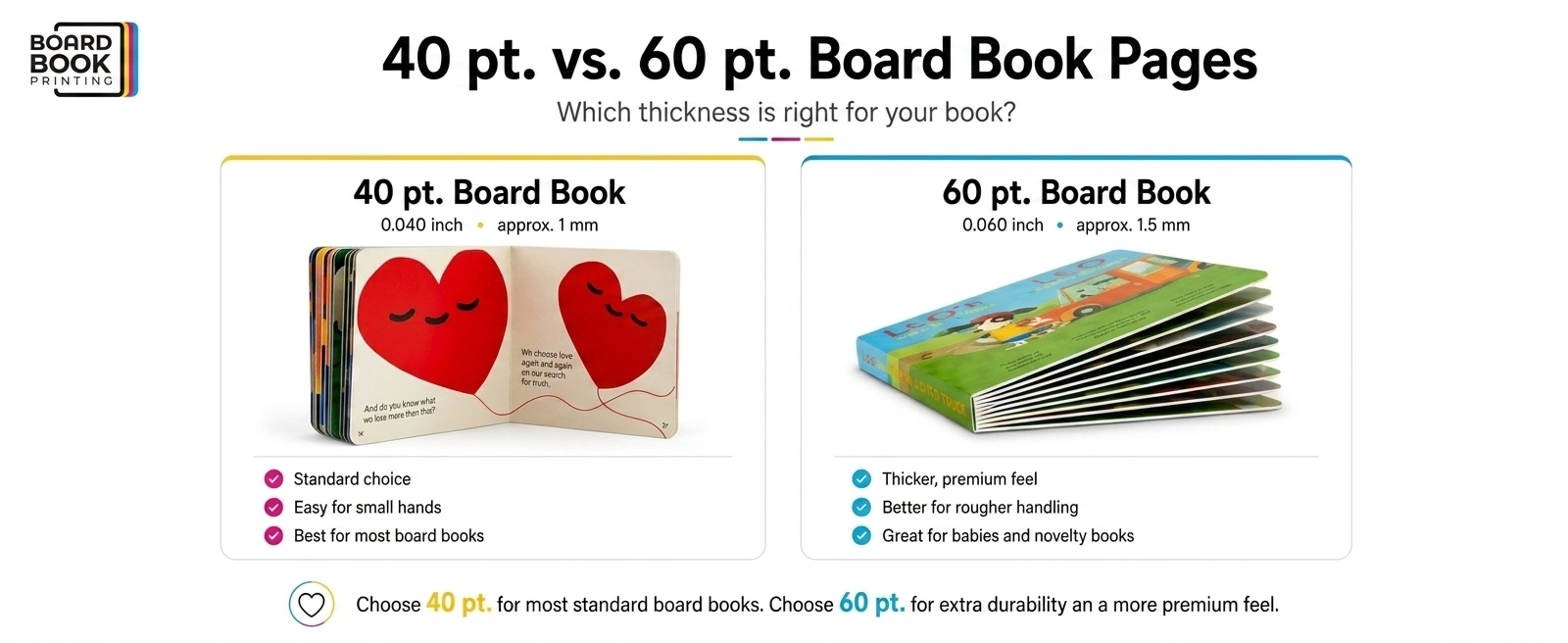
While a difference of 20 points (0.020 inch, approx. 0.5 mm) might not sound like much, 60 pt board is thicker, more rigid, and creates a wider spine and heavier book than 40 pt board.
Illustrative comparison only. Not drawn to scale. Actual thickness and stack height may vary.
That difference sounds small, but it changes the feel of the finished book.
40 pt. board stock is the common choice for many board books. It gives the book enough strength for regular handling, sticky fingers, page turning, and repeated readings. It also keeps the pages easy for small hands to turn.
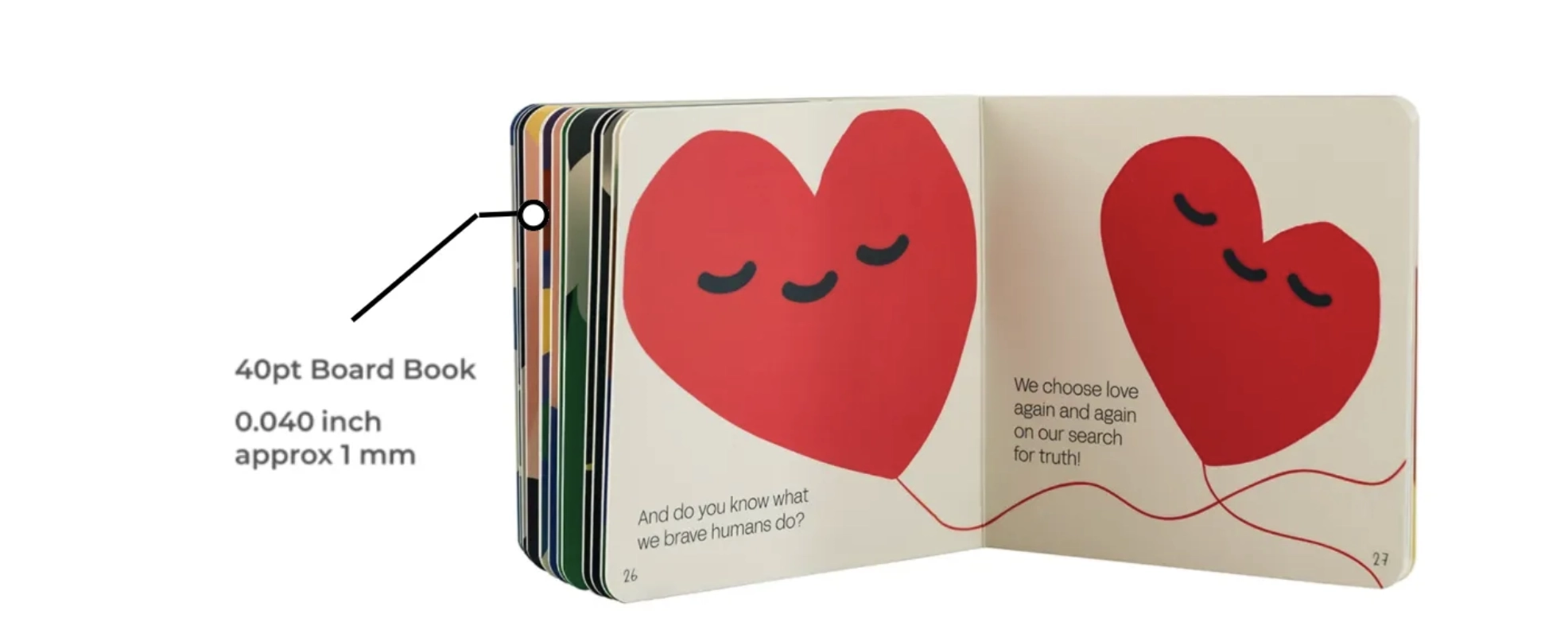
"The book opens well, lies flat, and feels familiar to parents and children."
40 pt. is a strong fit for most general board book titles. This includes picture books, alphabet books, counting books, bedtime books, and simple storybooks. It works well for books aimed at children aged 2 and up.
For self-published board books, 40 pt board books are a little less expensive to produce thus helping self-published authors maximize margins even with smaller 300-500 unit print runs, and when listing on Amazon FBA inventory For publishers printing larger print runs, the margins are even better as the price decreases as quantity increases, unlike Print On Demand.
A 60 pt. board book feels thicker, firmer, and more premium. It gives the book a chunkier look on the shelf, which works well for infant and toddler titles. If you want a high-end, luxurious board book, 60 pt. is a great choice.
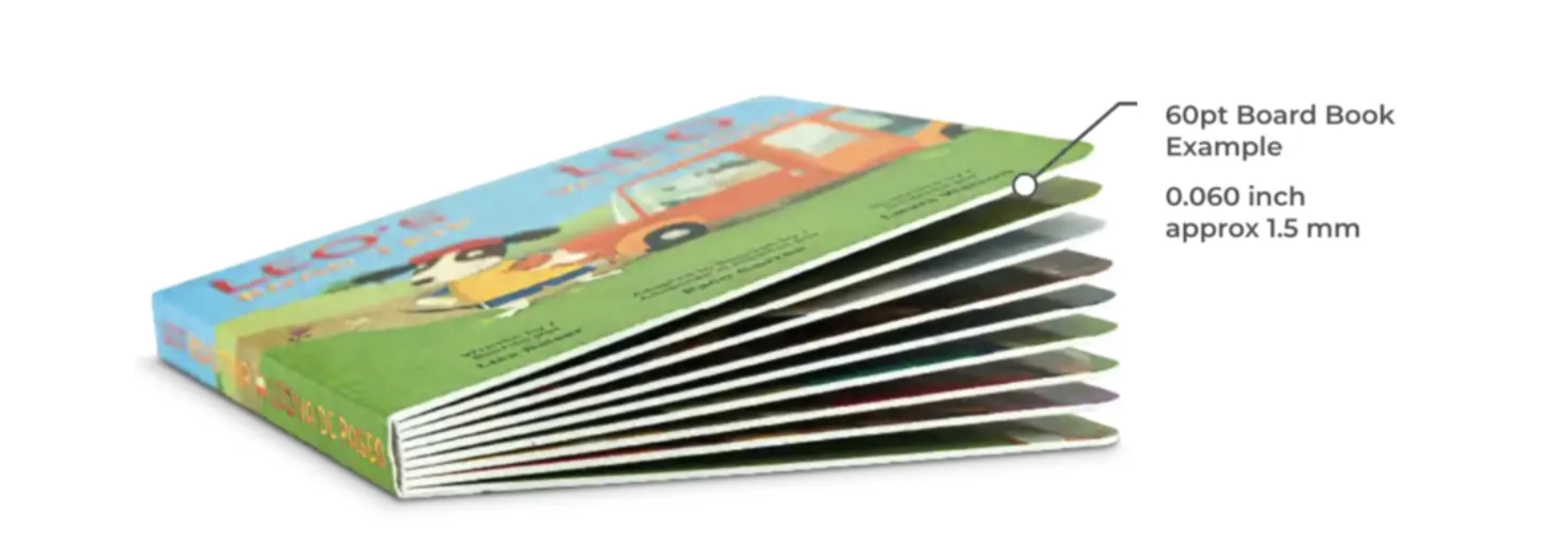
60 pt is a great choice for board books intended for libraries, daycares, and other high-handling distribution opportunities. A thicker board gives the book additional durability and a premium feel.
60 pt. board stock can also support certain custom features. This includes novelty formats, touch-and-feel books, lift-the-flap concepts, display books, and first-word books. Some designs need the extra stiffness that 60 pt provides.
There is no single correct choice. The best thickness depends on the book, the reader, the budget, and the way the book will be used.
Board books can warp. Temperature changes, weak materials, poor glue, and rushed production can all affect the finished book.
That is why the printer matters. An experienced board book printer like us understands board stock, lamination, binding, finishing, and moisture control. Good production helps the book keep its shape through repeated use.
Ready to print your board book? Use our instant quote calculator to get pricing for your project.
Request A Quote Today
